
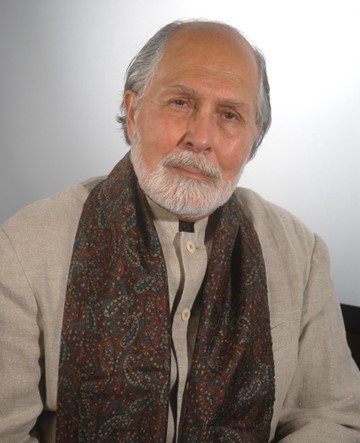
Syed Hossein nasr
Seyyed Hossein Nasr (b. April 7, 1933, Tehran) is a renowned Iranian-American philosopher, theologian, and one of the foremost scholars of Islamic thought in the contemporary world. He received his early education in Iran before moving to the United States, where he became the first Iranian undergraduate at MIT, earning a degree in physics and mathematics. He later completed a Ph.D. in the history of science and philosophy at Harvard University. Nasr is widely recognized for his work on Islamic philosophy, Sufism, the traditional sciences, and the dialogue between religion and the modern world. Currently serving as University Professor of Islamic Studies at The George Washington University, he has authored over 60 books and hundreds of articles. Fluent in Persian, English, Arabic, and French, Nasr is a leading figure of the Perennial Philosophy and Traditionalist School, known for his critique of modernity and his call for a return to the sacred in both science and culture.
Books

Islamic art & spirituality

Islamic Philosophy from Its Origin to the Present
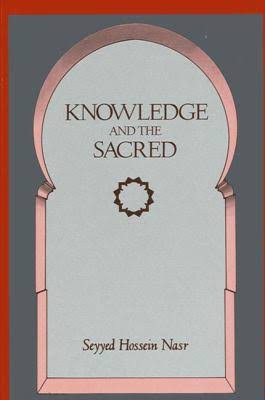
Knowledge and the Sacred
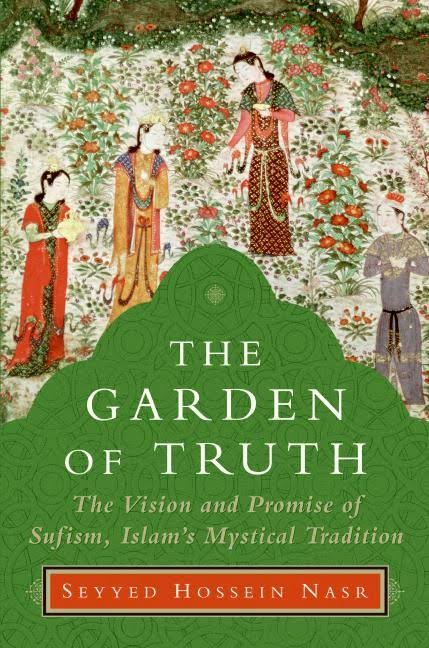
The Garden of Truth
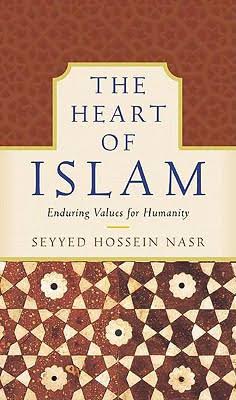
The Heart of Islam
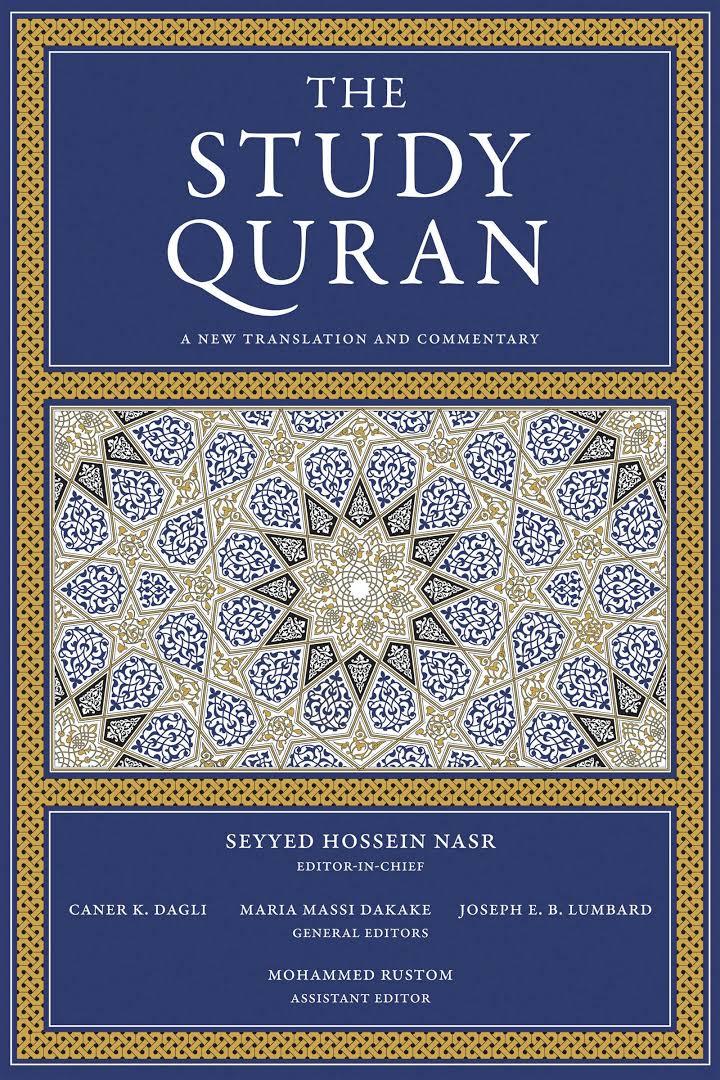
The Study Quran
Meet the Author & Works
Interview : Is the contact with live Tradition still possible nowadays
Natella Speranskaya: Western civilization is going through a general crisis and, by all appearances, is moving towards a catastrophic end. René Guénon called it the inversion of traditional civilization. He also affirmed that Western people today had lost their knowledge of what pure intellectual activity is. He reproached them with the Eurocentric approach, which by the ... Read more

On the Science of the Soul – A Conversation with Seyyed Hossein Nasr
Samuel Bendeck Sotillos, PsyDCarmel Valley, California The monopolistic tendency of modern science in asserting itself as the exclusiveinterpreter of the human psyche or mind through its psychology does so while negating the mostcrucial dimension that makes it a complete psychology, the metaphysical order as is found acrossthe world in all times and places. The reductionistic ... Read more
The Nature of Man
The Islamic conception of man is summarized in the doctrine of al-insān al-kāmil, the universal or perfect man, a doctrine whose essence and full manifestation is to be found in the Prophet of Islam and whose doctrinal exposition and formulation was left to later sages and saints such as Ibn ʿArabī and Jalāl al-Dīn Rūmī. ... Read more
Early Life and Education
Seyyed Hossein Nasr was born on April 7, 1933, in Tehran, Iran, into a distinguished family of scholars and public figures. His father, Seyyed Valiollah Nasr, was a respected physician and intellectual, and his lineage includes prominent religious scholars such as Sheikh Fazlollah Nouri. After completing his early education in Iran, Nasr moved to the United States, where he became the first Iranian to study at the Massachusetts Institute of Technology (MIT), earning a Bachelor’s degree in Physics and Mathematics. He continued his academic journey at Harvard University, receiving a Master’s in Geology and Geophysics, followed by a Ph.D. in the History of Science and Philosophy. His doctoral studies focused on Islamic science and philosophy, laying the groundwork for his lifelong scholarly contributions.
Academic and Professional Career
In 1958, Nasr returned to Iran, turning down academic positions in the United States in order to serve his homeland. He joined the faculty at Tehran University as a professor of philosophy and the history of science. Over time, he held several prominent academic and administrative positions, including Vice-Chancellor of Tehran University and President of Aryamehr University of Technology (now Sharif University). In 1973, at the initiative of Empress Farah Pahlavi, he founded the Imperial Iranian Academy of Philosophy, which became a hub for both traditional Islamic philosophy and intercultural philosophical dialogue.
After the 1979 Islamic Revolution, Nasr was forced into exile and settled in the United States. He held professorial positions at the University of Utah and Temple University before being appointed as University Professor of Islamic Studies at The George Washington University in 1984 — a position he continues to hold. His academic career has been marked by a deep commitment to the integration of traditional wisdom with contemporary discourse, as well as by mentorship of a new generation of Muslim scholars.
Contributions and Influence
Seyyed Hossein Nasr is widely recognized as one of the leading voices of the Traditionalist School and a prominent advocate of the Perennial Philosophy — a worldview that affirms the underlying unity of all authentic religious traditions. His work has profoundly influenced contemporary Islamic philosophy, environmental ethics, and the dialogue between science and religion. Nasr has consistently critiqued the secularization of knowledge and modernity’s disconnection from the sacred, calling instead for a return to metaphysical and spiritual principles as the foundation for both education and scientific inquiry. His writings bridge classical Islamic thought with Western philosophical traditions, making him a central figure in global intellectual discourse.
Awards and Honors
- Library of Living Philosophers (2001): First Muslim scholar to be featured in a volume dedicated to his life and work.
- Templeton Religion and Science Award (1999): Recognized for his contribution to the intersection of religion and science.
- Gifford Lectures (1981): First Muslim and non-Western scholar invited to deliver these prestigious lectures.
- Honorary Doctorate, Uppsala University (1977): Awarded by the Faculty of Theology in Sweden.
- Prix Charles Blanc (1977): Granted by the Académie Française for his work La Perse, pont de Turquoise.
- Joseph B. and Toby Gittler Prize (2010): Awarded by Brandeis University for contributions to understanding across racial, ethnic, and religious boundaries.
Institutional Affiliations
- Tehran University: Professor, Vice-Chancellor
- Aryamehr University of Technology: President
- Imperial Iranian Academy of Philosophy: Founder and President
- University of Utah: Professor of Islamic Studies
- Temple University: Professor of Islamic Studies
- The George Washington University: University Professor of Islamic Studies (1984–present)