
Ahmet Demirhan

Imagining the Chinese Typewriter
As we shall see in the next essay, the difficulties of Derrida’s attempt, in Grammatology, to draw upon a figure of China—most likely from the Western canon (or from the Western “process” of thought about China)—while discussing Chinese ideographic writing and, of course, Egyptian hieroglyphs, that is, to rely on a figure such as the characters of Chinese writing, also become evident here.
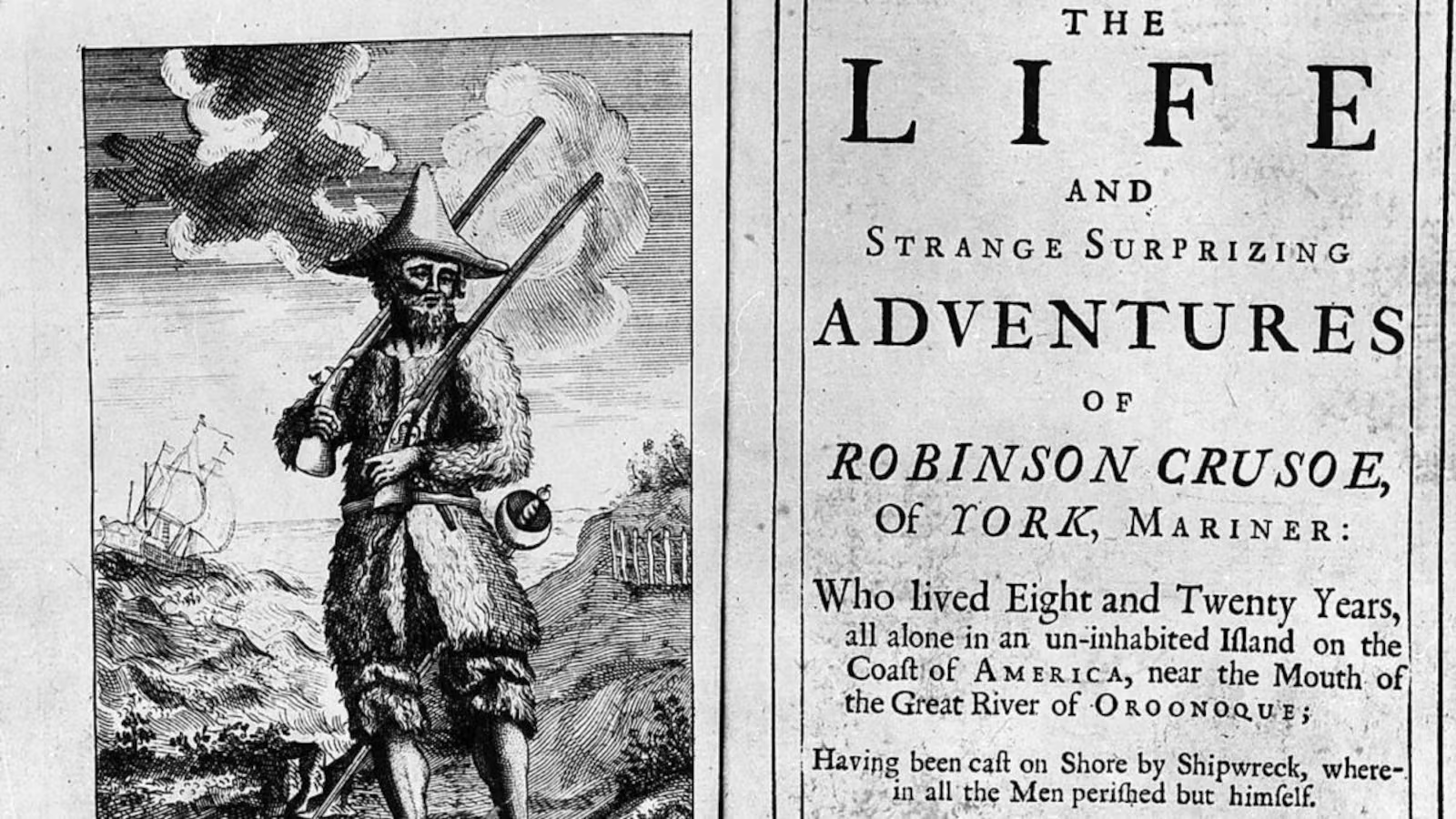
Is Robinson Crusoe a Novel That Tells the Story of “Everyone”?
Robinson, a terrestrial creature, escapes the anxiety caused by a single footprint—which drives him toward an extraterrestrial fear (and, of course, toward the sublime)—not like the “ordinary person who, in the Age of Enlightenment, stands before the universe, striving to break traditional rigidities and transform the world through the power of reason,” but by adopting a view that hierarchically divides humanity in order to secure his anthropological safety.

Reciting a Rosary Before Heidegger’s Hut – 2
Then let us return to the beginning: Is it not possible that, in Heidegger’s own thinking on Being—where the “river,” even if not the sea of Being itself, is said to be synonymous with the journey—what he pulled out with his fishing line was not a fish, but rather an old boot or (why not?) a sandal from ancient Greece, the kind that might have been worn by Socrates himself, the very figure who, in the Western tradition, is said to have initiated metaphysics?
Thinking About Being in Front of Heidegger’s Hut
This question came to mind while reading Journey to Heidegger’s Hut (Heidegger’in Kulübesine Yolculuk), İbrahim Kalın’s book about his 2019 visit to Heidegger’s hut in Todtnauberg—a visit whose introduction, as those interested will already know, was partially published earlier. In particular, it arose while reading the sections that explore the relationship between Being and representation, summarized as follows: “What we describe with words and concepts”—and of course, this includes the word or concept Being—“is not Being itself, but its representation in language and thought”